PPF vs. Ceramic Coating: Which One Do You Actually Need?
— Tips & Guides
PPF stops rocks. Ceramic coating repels water. Here's why most of our customers end up getting both — and what that Bentley with the perfect water beads has to do with it.
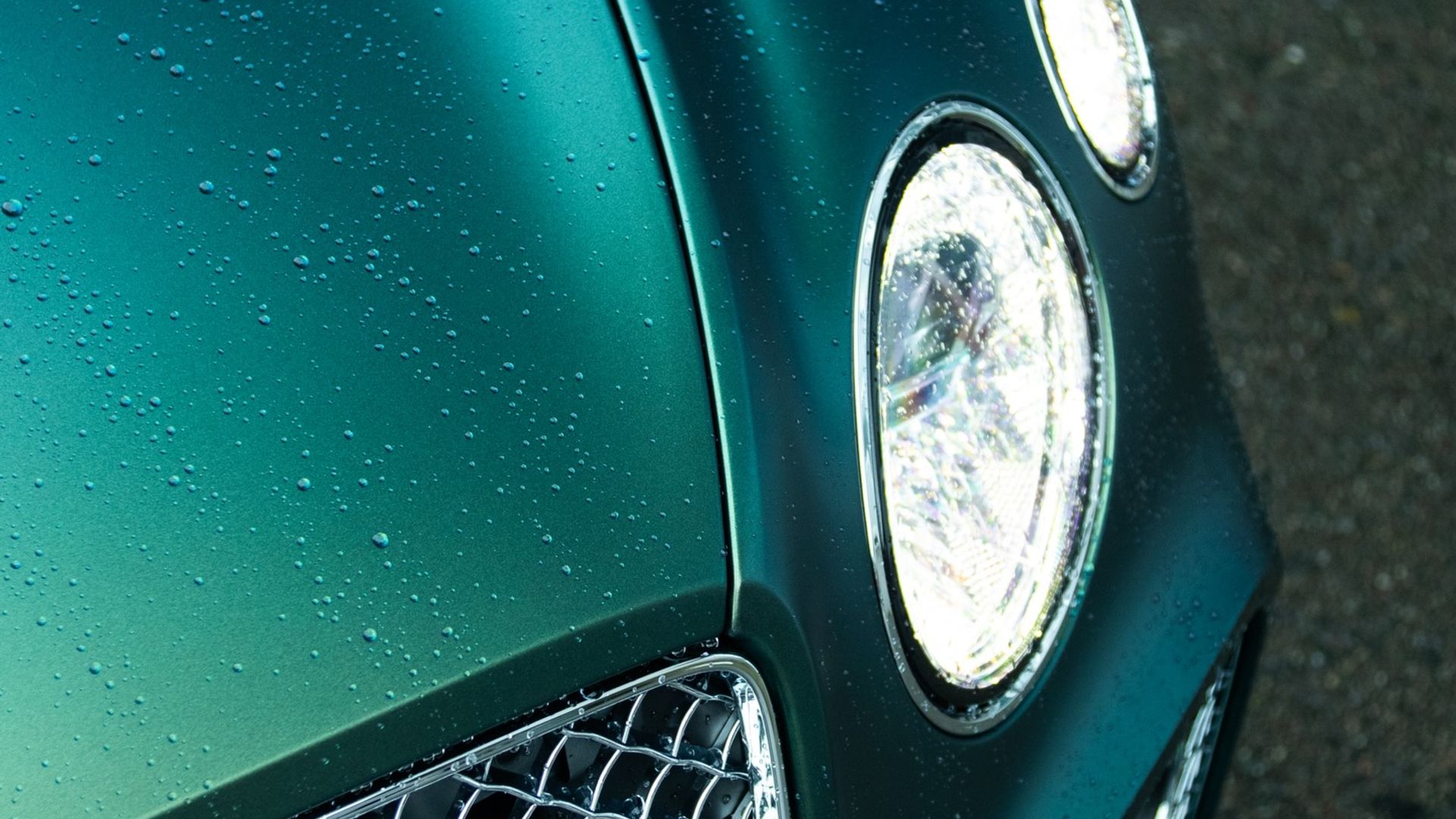
Take a look at this Bentley Continental GT. See those water beads sitting perfectly on the hood? That's ceramic coating at work — creating a hydrophobic surface that makes water slide right off. But notice something else: the paint underneath is flawless. No chips, no scratches. That's because this car also has PPF on the front end.
Two Different Jobs
PPF is a thick physical barrier. Seven to eight mils of self-healing urethane that literally stops rocks from chipping your paint. Ceramic coating is a chemical bond — a nano-layer that repels water, UV rays, and contaminants. They do completely different things.
What PPF Gives You
- Physical impact protection — it absorbs rock chips and road debris
- Self-healing surface — light scratches disappear with heat
- Available in gloss, matte, satin, and even color finishes
- 10-year warranty with UNITY USA film
What Ceramic Coating Gives You
- Hydrophobic surface — water beads and sheets off like you see on this Bentley
- UV protection that prevents fading and oxidation
- Makes washing easier — dirt and grime can't bond to the surface
- Adds depth and gloss to your paint
The Real Answer? Get Both.
Most of our clients at EMWRAPS end up doing PPF on the high-impact zones — front bumper, hood, fenders, rocker panels — then ceramic coating over the entire car, including on top of the PPF. The ceramic makes the PPF easier to clean and even more slippery, while the PPF handles the physical protection underneath.
Not Sure What You Need?
Book a free consult. We'll look at your car, your driving habits, and your budget, then recommend the right combination. Call (206) 383-5328.
More like this.
- McLaren 750S: PPF + Tint + Ceramic — The Ultimate Protection Stack — April 10, 2026
"If you can't notice what we did, that means we are good." Full gloss PPF, ceramic window tint, windshield film, and Gtechniq ceramic coating on a McLaren 750S. The triple stack explained with pricing and process. - Color PPF: How We Restored a Nissan PAO with Gloss Black Film — April 9, 2026
Color PPF isn't just for new cars — it's a restoration tool. We transformed a Nissan PAO with failing paint into a show-quality build using gloss black color PPF. Full surface sanding, wrapped jambs, and self-healing protection. 8 photos documenting the full transformation. - How Much Does PPF Cost in Seattle? (2026 Price Guide) — March 18, 2026
We get asked about PPF pricing every day. Here's an honest breakdown straight from our shop — what it costs, what changes the price, and why it pays for itself.
Read more on the EMWRAPS Blog.
EMWRAPS — 1900 Airport Way S #103, Seattle, WA 98134. Call (206) 383-5328 for a free quote.
Hours: Monday–Friday 11:00 AM – 6:00 PM · Saturday & Sunday by appointment.